
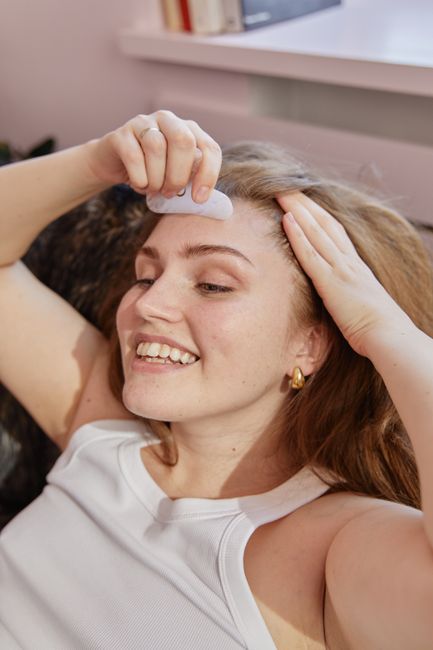
The Octopus Gua Sha: Your Guide to a Better Scalp Massage
Is Your Scalp the Hidden Source of Your Discomfort?
We often blame our shoulders for carrying the weight of daily stress, but the tension rarely stops there. It creeps upward, tightening the fibrous sheet of tissue covering our skull—the galea aponeurotica—creating a source of discomfort we learn to ignore. This chronic tightness can manifest in surprising ways: persistent tension headaches that seem to have no cause, a clenched jaw, or even hair that appears dull and lifeless. Your scalp is a crucial, yet often neglected, area of your body, and releasing its accumulated stress can be the key to unlocking a greater sense of well-being.
A Targeted Tool for Tangible Relief: Introducing the Multi-Pronged Gua Sha
While fingers can provide a pleasant massage, they cannot offer the consistent, targeted pressure needed to effectively release deep fascial adhesions. This is where the octopus gua sha, a modern evolution of an ancient practice, excels. Unlike the flat stones used for the face, this tool features several rounded legs designed to cradle the skull. This unique shape allows it to distribute firm, even pressure across multiple points at once, gently breaking up knots and stimulating circulation without snagging hair. Carved from materials like Bian stone or jade, the tool acts as a natural extension of your hand, enabling a more profound and effective massage.
Taking the next step becomes straightforward when you have the right support — Get the best book with practical guides on digital communication essentials is worth exploring.
Taking the next step becomes straightforward when you have the right support — Become an Ultimate Master of your life is worth exploring.

A Practical Guide to Releasing Scalp Tension
The beauty of the scalp gua sha lies in its versatility. By varying your technique, you can target specific concerns, turning a simple massage into a personalized therapeutic session. Always begin on dry or lightly oiled hair to ensure the tool glides smoothly.
For Easing Tension Headaches
Focus on the areas where tension congregates. Use the tips of the tool’s prongs to apply firm, slow circles at your temples and behind your ears. Then, locate the occipital ridge—the bony line at the base of your skull—and use gentle pressing motions along it. This technique helps release the temporalis and occipitalis muscles, which are often culprits in tension-related head pain.
To Invigorate Hair Follicles
To create an optimal environment for healthy hair, the goal is to boost microcirculation, delivering vital oxygen and nutrients to the roots. Start at your hairline and perform long, deliberate combing strokes, gliding the tool all the way to the nape of your neck. Repeat this motion in sections across your entire scalp. For an enhanced effect, perform this massage after applying a nourishing scalp serum to aid product absorption.
For a Full-Body Calming Effect
Your scalp is rich with nerve endings connected to your entire nervous system. A slow, rhythmic massage can shift your body into a relaxed, parasympathetic state. Use gentle, sweeping strokes across the entire head for 5-10 minutes before bed. This meditative practice can help quiet a busy mind, reduce cortisol levels, and pave the way for a more restful night’s sleep.
Integrating Scalp Massage into Your Wellness Routine
Lasting benefits come from consistency. Aim to make this practice a non-negotiable part of your schedule 3-4 times per week. To maintain both hygiene and the energetic purity of your tool, wash it with a gentle soap after every session and dry it thoroughly. By dedicating just a few minutes to this ritual, you are not just caring for your scalp—you are sending a powerful signal of relaxation to your entire body, fostering a foundation of health that radiates from the head down.